To really get what this is about, we have to look at the Kahuna. In ancient Hawaii, a Kahuna was a master of a specific craft-a priest, a navigator, or a healer. They didn't just study anatomy; they studied the connection between the land, the spirit, and the physical form. When you experience this style of massage, you are tapping into a lineage that treats the body as a map of your life's experiences. If you have a tight hip, a Kahuna practitioner doesn't just see a tight muscle; they see a place where you might be holding onto old grief or fear.
The Magic of the Lomi Lomi Technique
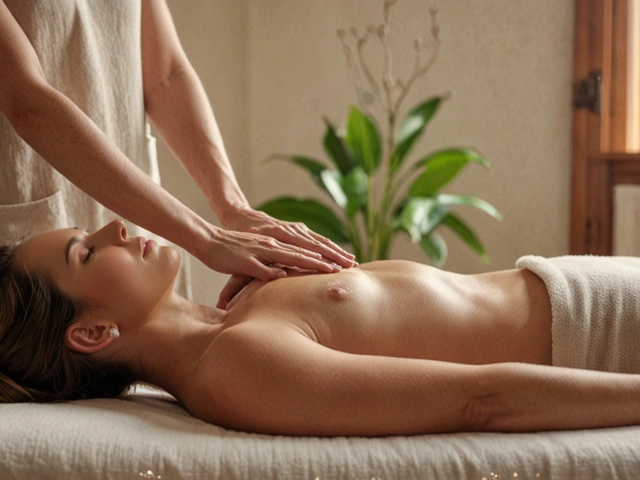
If you have had a Swedish massage, you know the standard long strokes. Now, imagine those strokes becoming fluid, like waves hitting a beach. In Lomi Lomi, the therapist often uses their forearms and elbows to create wide, sweeping motions that cover large areas of the body at once. This creates a continuous flow of energy, preventing the "stop-and-start" feeling of typical massages.
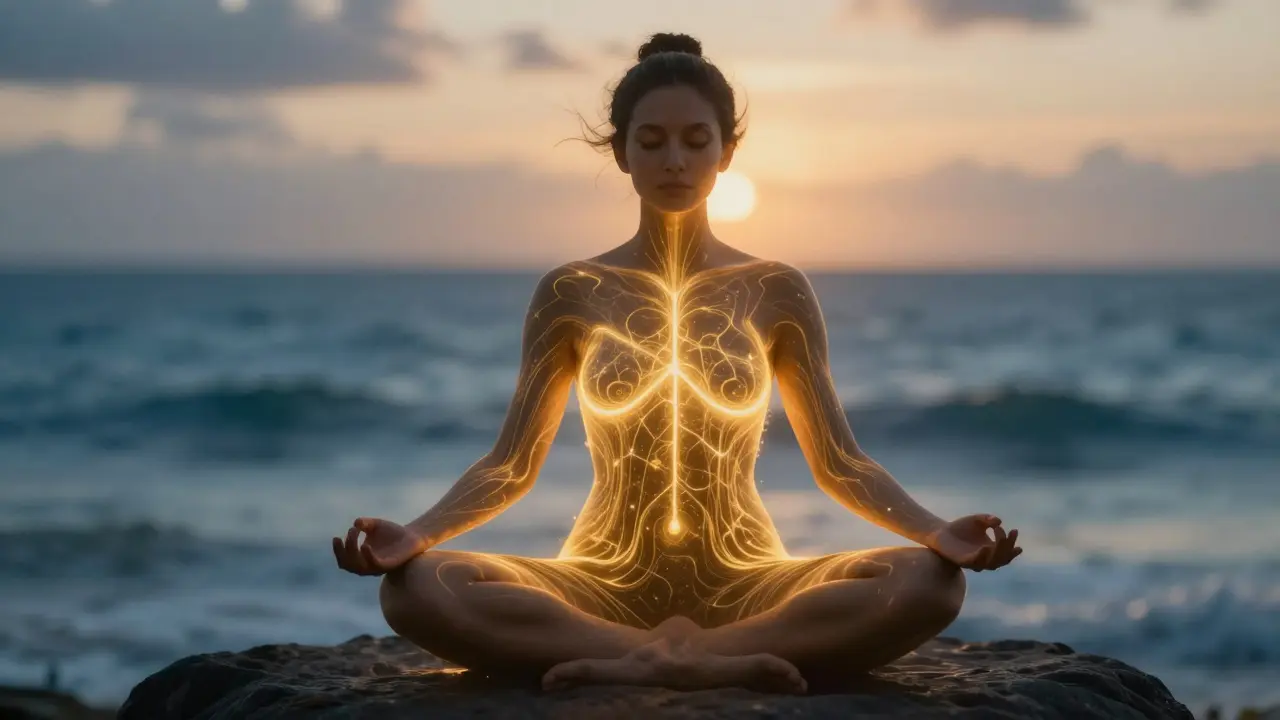
This technique does more than just relax muscles. By using the whole arm and moving the body in a rhythmic way, it mimics the natural cadence of the ocean. This triggers a deep parasympathetic response in the nervous system. Have you ever noticed how you feel instantly calmer near water? Lomi Lomi tries to bring that same frequency into the treatment room. It shifts you from a state of "fight or flight" into a state of "rest and digest," which is where real healing happens.
| Feature | Kahuna (Lomi Lomi) | Deep Tissue | Swedish Massage |
|---|---|---|---|
| Primary Goal | Energy flow & emotional release | Chronic pain & muscle knots | General relaxation |
| Technique | Forearms, rhythmic waves | Deep pressure, friction | Effleurage & petrissage |
| Pace | Fluid and continuous | Slow and targeted | Moderate and rhythmic |
| Focus | Holistic (Mind-Body-Spirit) | Physical (Musculoskeletal) | Physical (Circulation) |
Integrating Healing Into Your Daily Routine
You can't always spend two hours on a massage table, but you can bring the philosophy of the Kahuna into your Tuesday morning. The core idea is flow. When we get stressed, we "constrict." We hold our breath, we clench our jaws, and we hunch our shoulders. The Kahuna approach teaches us to identify these points of constriction and consciously soften them.
Try this simple habit: three times a day, do a "body scan" for tension. Instead of just noticing a tight shoulder, imagine a wave of warm water washing through that area, smoothing it out. This mental shift from "fixing a problem" to "allowing a flow" is exactly how the Hawaiian healers approach the body. It changes your relationship with your own stress from one of combat to one of compassion.

The Emotional Release: Why You Might Cry
It is surprisingly common for people to experience a strong emotional reaction during a session. You might find yourself tearing up or feeling a sudden burst of joy without any clear reason. This happens because the body stores trauma in the fascia-the connective tissue that wraps around your muscles. When a therapist uses the long, sweeping strokes of Lomi Lomi, they aren't just moving skin; they are releasing the physical memory of stress.
Think of it like a dam that has been holding back water for years. When the pressure is finally released, the water flows. In a professional setting, this is a safe way to process emotions that you may have pushed down. It is not a sign of weakness, but a sign that your body is finally feeling safe enough to let go of what it no longer needs to carry.
Choosing the Right Practitioner
Because this is an intuitive and energetic practice, the connection between you and the therapist is everything. A true practitioner of this art doesn't follow a rigid script. They listen to the "song" of your body. If they spend twenty minutes on your lower back and barely touch your legs, it is because that is where your energy was blocked today.
When looking for a provider, ask about their training in Holistic Health. Do they understand the concept of Mana (life force)? Do they emphasize the spiritual aspect of the work, or are they just doing "long strokes"? The difference is the difference between a gym workout and a spiritual retreat. You want someone who views the massage as a sacred exchange, not just a service on a menu.

Practical Tips for Your First Session
If you are new to this, a few small things can make the experience much more powerful. First, hydrate. Moving lymph and releasing toxins requires plenty of water, or you might feel a bit sluggish the next day. Second, avoid a heavy meal right before your appointment. The rhythmic movements of the forearms can be quite stimulating to the digestive system, and you want your energy focused on relaxation, not digestion.
Most importantly, let go of the need to "get it right." You don't need to perform or be a perfect patient. Just breathe. The more you fight the flow, the longer it takes to reach that state of deep peace. If a certain movement feels too intense, just speak up. The beauty of the Kahuna style is its adaptability; it meets you exactly where you are.
Is Kahuna massage the same as Lomi Lomi?
Essentially, yes. Lomi Lomi is the specific massage technique, while Kahuna refers to the master healer or priest who performs the work. When people talk about Kahuna massage, they are usually referring to the holistic, spiritual approach to Lomi Lomi that focuses on moving energy and healing the whole person rather than just treating a specific muscle.
Can I do Lomi Lomi on myself?
While you can't replicate the full-body forearm sweeps on yourself, you can practice the principle of "flow." Use long, sweeping motions with your palms on your arms, thighs, and stomach. The key is to keep the movement continuous and rhythmic, focusing on the intention of clearing blockages rather than digging into knots.
How often should I get a Kahuna massage?
It depends on your needs. For general maintenance and stress relief, once a month is usually sufficient. However, if you are going through a major life transition or recovering from emotional trauma, weekly sessions for a short period can help accelerate the release of stored tension and restore your internal balance.
Is it safe for people with chronic pain?
Yes, generally. Because it is more fluid and less aggressive than deep-tissue massage, it is often better for people with high sensitivity or chronic pain. However, always inform your therapist about any medical conditions, such as blood clots or severe osteoporosis, as certain movements may need to be modified.
What should I wear during the session?
Like most professional massages, you will typically undress to your comfort level and be covered by a sheet or towel. Because Lomi Lomi involves wide movements, the therapist will only uncover the specific part of the body they are working on, ensuring you stay warm and feel secure throughout the process.
What to do next
If you're feeling called to try this, start by searching for a certified Lomi Lomi practitioner in your area. Don't just look at the price; look at their philosophy. If their website mentions "energy," "spirit," and "wholeness," you're on the right track. If you can't find a local expert, start with the daily "flow" exercises mentioned above. Spend five minutes every morning imagining your stress as a river that is finally allowed to flow freely into the sea. It sounds simple, but that shift in perspective is where the real power of the Kahuna tradition begins.