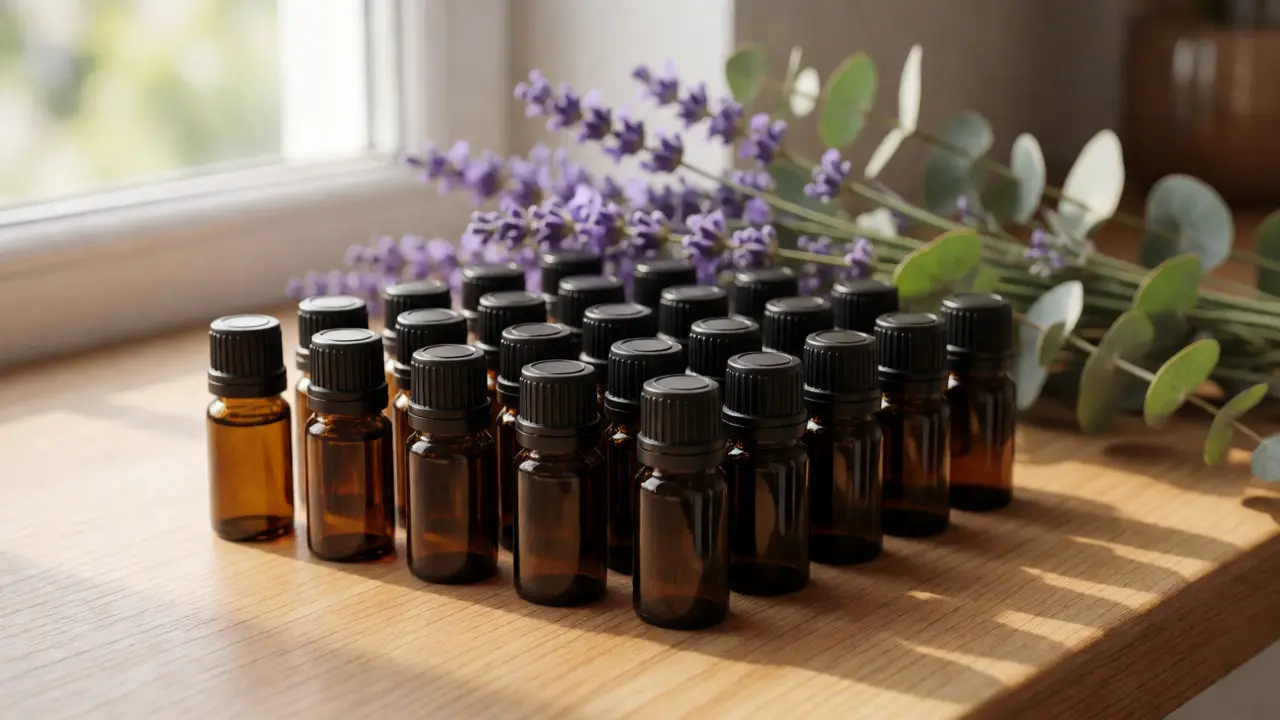
You’re staring at a shelf lined with tiny brown bottles, each promising to fix your insomnia, clear your sinuses, or boost your mood. It’s overwhelming. You don’t need fifty different scents; you need the right ten. Building an aromatherapy collection is about utility, not hoarding glass vials. If you’re just starting out, you want oils that pull their weight in multiple ways-smelling good, helping you sleep, and keeping your home clean.
This isn’t about esoteric magic. It’s about chemistry and practical application. Certain plant extracts have proven effects on our limbic system, the part of the brain that handles emotion and memory. When you inhale these volatile compounds, they travel straight to this area, bypassing the logical brain. That’s why a scent can instantly calm you down or wake you up. But which ones actually work? And more importantly, which ones are safe enough for daily use without turning your living room into a perfume factory?
The Core Ten: Your Starter Kit
Forget the exotic imports for now. Start with these ten. They cover the vast majority of common household needs, from stress relief to minor skin irritations. Each one has specific attributes that make it indispensable.
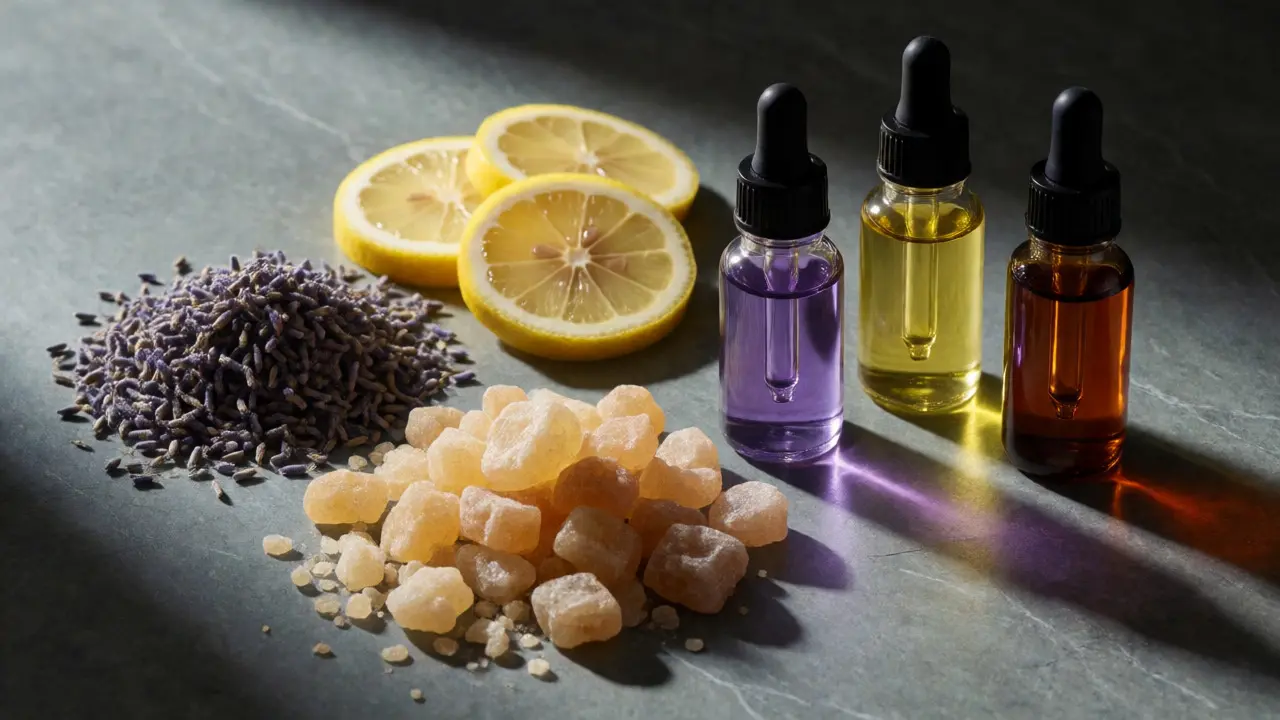
Lavender (Lavandula angustifolia) is the undisputed king of beginner oils. Why? Because it’s forgiving. It’s rarely toxic, smells pleasant to almost everyone, and does three things well: promotes sleep, soothes minor burns, and reduces anxiety. Studies suggest it lowers heart rate and blood pressure, making it perfect for bedtime diffusion. If you buy only one oil, make it this one.
Peppermint (Mentha piperita) is your energy drink in a bottle. The main active compound, menthol, triggers cold receptors in your nose, giving an instant alertness boost. Use it when you hit that 3 PM slump instead of reaching for coffee. It also helps with headaches-dab a tiny amount (diluted!) on your temples. Just be careful: it’s potent. Too much can cause burning sensations, so less is more here.
Tea Tree (Melaleuca alternifolia) is nature’s antiseptic. Originating from Australia, this oil is packed with terpinen-4-ol, a compound known for its antimicrobial properties. Keep it handy for acne spot treatments, fungal nail issues, or cleaning surfaces. It doesn’t smell “nice” in the traditional sense-it’s medicinal and camphor-like-but its effectiveness is undeniable. Never ingest it; topical use only.
Eucalyptus (Eucalyptus globulus) is the go-to for respiratory support. During flu season or when allergies flare up, diffusing eucalyptus can help open up nasal passages. Its high cineole content acts as a decongestant. Pair it with peppermint for a powerful sinus-clearing blend. Note: avoid using strong eucalyptus around very young children, as it can sometimes trigger breathing spasms in infants.
Lemon (Citrus limon) is bright, clean, and surprisingly versatile. It’s excellent for mental clarity and focus. Many people diffuse lemon while working to keep their minds sharp. It’s also a natural degreaser, so add a few drops to your DIY all-purpose cleaner. One caution: citrus oils are phototoxic. Don’t apply undiluted lemon oil to your skin and then walk out into direct sunlight, or you might get a burn.
Frankincense (Boswellia carterii) is often associated with meditation and spirituality, but its benefits are physical too. It supports healthy cell turnover and is great for mature skin. In aromatherapy, it grounds you. If you feel scattered or anxious, frankincense’s woody, resinous scent encourages deep, slow breathing. It’s expensive compared to others, but a little goes a long way.
Rosemary (Rosmarinus officinalis) is linked to memory retention. Some research indicates that inhaling rosemary improves cognitive performance and alertness. It’s also a natural pest deterrent-spiders hate it. Diffuse it in corners where bugs like to hang out. Like eucalyptus, check with a doctor before using it if you have epilepsy, as some studies suggest it might lower seizure thresholds in rare cases.
Geranium (Pelargonium graveolens) is the emotional balancer. It’s sweet, floral, and similar to rose but much cheaper. Geranium is known for stabilizing mood swings, whether you’re dealing with PMS, menopause symptoms, or general irritability. It’s also gentle on the skin, making it a good addition to homemade lotions or facial steams.
Ylang Ylang (Cananga odorata) is heavy, sweet, and romantic. It’s famous for lowering blood pressure and inducing relaxation. Use it sparingly-it’s intense. A single drop can overpower a room. Blend it with lighter oils like bergamot or lemon to create a spa-like atmosphere. It’s also traditionally used as an aphrodisiac, though the science there is more anecdotal than clinical.
Sweet Orange (Citrus sinensis) is the happy oil. It’s inexpensive, widely available, and universally liked. Citrus scents are shown to reduce cortisol levels, the body’s primary stress hormone. Diffuse it after dinner to lift the mood and aid digestion. Unlike lemon, sweet orange is generally less phototoxic, but still best diluted on skin.
How to Actually Use Them
Owning the oils is half the battle. Using them correctly is where most beginners fail. There are three main methods: diffusion, topical application, and inhalation.
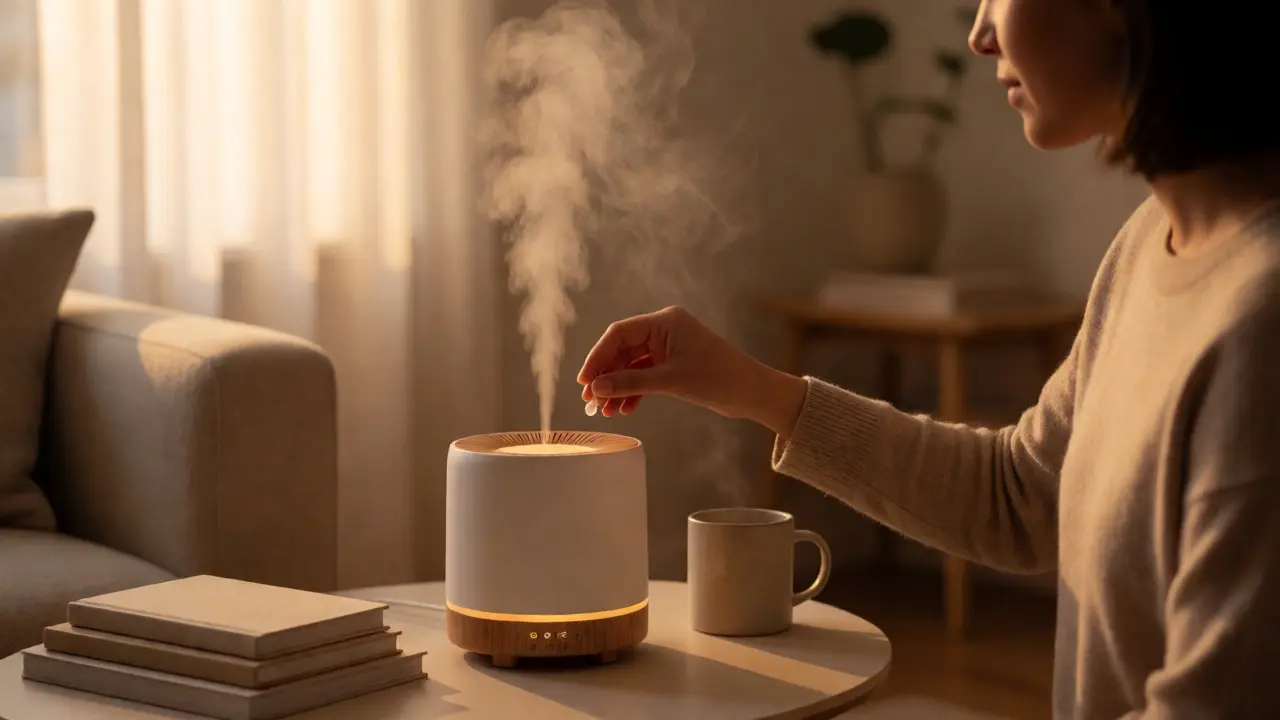
- Diffusion: This is the safest method for whole-room scenting. Use an ultrasonic diffuser, which uses water and vibration to create mist. Avoid heat-based diffusers for delicate oils like citrus, as heat can degrade the chemical structure. Run your diffuser for 30-60 minutes, then turn it off. Continuous exposure can lead to olfactory fatigue-you’ll stop smelling it, but the air is still saturated.
- Topical Application: Never put pure essential oil directly on your skin unless you know your tolerance. Always dilute it in a carrier oil like jojoba, coconut, or almond oil. A standard ratio for adults is 2-3% dilution. That means roughly 6-9 drops of essential oil per tablespoon (15ml) of carrier oil. Patch test first: apply a small amount to your inner arm and wait 24 hours to check for reactions.
- Inhalation: For quick fixes, place one drop on a tissue or cotton ball and inhale deeply. Or, add two drops to a bowl of hot water, drape a towel over your head, and breathe in the steam. This is great for congestion but watch out for splashes.
Safety First: What Can Go Wrong
Essential oils are concentrated plant extracts. One bottle of lavender oil contains the essence of hundreds of pounds of flowers. That concentration means they are powerful drugs, not just perfumes. Misuse can lead to sensitization, where your skin develops an allergic reaction that persists even after you stop using the oil.
| Group | Precautions | Oils to Approach with Caution |
|---|---|---|
| Pets (Cats/Dogs) | Cats lack liver enzymes to process certain compounds. Dogs are more tolerant but still sensitive. | Tea Tree, Peppermint, Eucalyptus, Citrus |
| Children (Under 6) | Dilute heavily (0.5-1%). Avoid strong stimulants near faces. | Eucalyptus, Rosemary, Peppermint |
| Pregnancy | Hormonal changes affect sensitivity. Consult a midwife or GP. | Clary Sage, Jasmine, Rosemary (avoid large amounts) |
| Photosensitive Skin | Avoid sun exposure for 12-24 hours after topical use. | Lemon, Lime, Bergamot (unless FCF - Furocoumarin Free) |
If you have cats, be extra careful. Tea tree oil, in particular, has caused severe toxicity in felines. Even passive diffusion can be risky if the room isn’t ventilated. Always provide an escape route-if your pet leaves the room, let them leave. Don’t force the scent on them.
Building Your Blends
Once you’re comfortable with individual oils, try blending. Think of it like cooking: you have top notes (light, evaporate quickly), middle notes (the heart of the blend), and base notes (heavy, lingering).
- Top Notes: Lemon, Sweet Orange, Peppermint. These give the initial impression.
- Middle Notes: Lavender, Geranium, Rosemary. These balance the blend.
- Base Notes: Frankincense, Ylang Ylang. These anchor the scent and last longest.
A simple recipe for a "Focus" blend: 3 drops Lemon (top), 2 drops Rosemary (middle), 1 drop Frankincense (base). Add to your diffuser with water. For a "Sleep" blend: 3 drops Lavender (middle), 2 drops Frankincense (base), 1 drop Sweet Orange (top). Experiment with ratios until you find what works for your nose.
Buying Quality Over Quantity
The market is flooded with fake oils. Many cheap bottles labeled "Lavender Oil" contain synthetic fragrance or are cut with cheaper carriers. How do you spot the real deal?
- Bottle Color: Real essential oils come in dark amber or cobalt blue glass. Clear plastic or glass lets light degrade the oil.
- Label Details: Look for the Latin botanical name (e.g., Lavandula angustifolia). If it just says "Lavender," be skeptical. Also, check for "100% Pure Essential Oil." Terms like "Fragrance Oil" or "Perfume Grade" mean it’s synthetic.
- Price: If it’s suspiciously cheap, it probably is. Producing true Rose oil requires thousands of petals per milliliter. True Lavender should cost more than synthetic alternatives.
- GC/MS Testing: Reputable brands offer Gas Chromatography/Mass Spectrometry reports. This proves the chemical composition matches what’s claimed. Ask for it.
Start with small bottles (5ml or 10ml). You won’t use much. A 10ml bottle of lavender can last months if you only diffuse occasionally. Buying bulk often leads to expired oil because oxidation happens faster once the seal is broken.
Next Steps for Your Collection
Don’t rush. Buy one oil at a time. Live with it for a week. See how it affects your sleep, your mood, your skin. Then add another. Your collection will grow organically based on your actual needs, not marketing hype. Keep them away from heat and sunlight, tightly capped. With proper care, most essential oils stay potent for 1-3 years. Citrus oils expire faster (6-12 months), while resins like Frankincense can last decades.
Aromatherapy is personal. What relaxes one person might energize another. Trust your senses. If a smell makes you feel good, it’s likely doing something beneficial for your nervous system. If it gives you a headache, ditch it. There are no wrong choices, only preferences.
Can I put essential oils directly on my skin?
Generally, no. Most essential oils are too concentrated and can cause irritation or sensitization. Always dilute them in a carrier oil like jojoba, coconut, or almond oil before applying to the skin. Exceptions exist for some individuals with lavender or tea tree, but patch testing is always recommended first.
Are essential oils safe for pets?
It depends on the animal. Cats are particularly sensitive because they lack specific liver enzymes to break down certain compounds found in oils like tea tree, peppermint, and citrus. Dogs are more tolerant but can still be overwhelmed by strong scents. Always consult a veterinarian before diffusing around pets, and ensure they have access to fresh air outside the treated room.
How long do essential oils last?
Shelf life varies by type. Citrus oils (lemon, orange) oxidize quickly and last 6-12 months. Floral and herbaceous oils (lavender, geranium) last 1-2 years. Resins and woods (frankincense, sandalwood) can last 5+ years. Store them in cool, dark places with tight caps to maximize longevity.
What is the difference between essential oil and fragrance oil?
Essential oils are natural extracts from plants, retaining therapeutic properties. Fragrance oils are synthetic or blended mixtures created for scent alone, often containing phthalates and other chemicals. Fragrance oils smell stronger and last longer but lack the health benefits associated with pure essential oils.
Can I ingest essential oils?
Not all essential oils are safe for ingestion. Only those marked as therapeutic grade and specifically approved for internal use should be considered. Even then, ingestion should be done under the guidance of a qualified aromatherapist or healthcare provider. Many popular oils, like eucalyptus and wintergreen, can be toxic if swallowed incorrectly.