Walk into a room that smells like stale coffee and old dust, and your shoulders probably tense up before you even realize it. Now imagine walking into a space that hits you with the crisp, clean scent of eucalyptus or the warm, grounding aroma of cedarwood. That shift isn't just pleasant; it's physiological. Your brain reacts to scent faster than it does to sight or sound because olfactory signals travel directly to the limbic system, the part of your brain that handles emotion and memory.
You don't need an expensive diffuser or a degree in chemistry to harness this power. Creating your own aromatic environment is one of the most accessible forms of aromatherapy, which is the practice of using plant-derived essential oils for therapeutic and environmental benefits. It’s about taking control of your atmosphere using simple ingredients you likely already have or can pick up cheaply. Let’s look at how to turn your home into a sanctuary using nothing but plants, water, and a bit of creativity.
Gathering Your Tools: What You Actually Need
Before we start mixing, let’s clear up a common misconception. You do not need ten different bottles of oil to get started. In fact, having too many options often leads to confusion and wasted money. To begin, focus on quality over quantity. Look for bottles labeled "100% pure essential oil" rather than "fragrance oil." Fragrance oils are synthetic and offer no therapeutic benefit; they just smell nice. Essential oils are concentrated plant extracts packed with bioactive compounds.
Here is a starter kit that covers most household needs:
- Lemon or Sweet Orange: These citrus oils are uplifting, energizing, and naturally antibacterial. They are perfect for kitchens and morning routines.
- Lavender: The gold standard for relaxation. It helps calm anxiety and promotes sleep. Keep this for bedrooms and evening wind-downs.
- Eucalyptus or Peppermint: These provide a cooling, clearing effect. They are excellent for boosting focus during work hours or clearing sinuses when you’re feeling under the weather.
- Carrier Oil (Optional):: If you plan to make roll-ons or massage blends, you’ll need a base like jojoba or fractionated coconut oil to dilute the potent essential oils so they don’t irritate your skin.
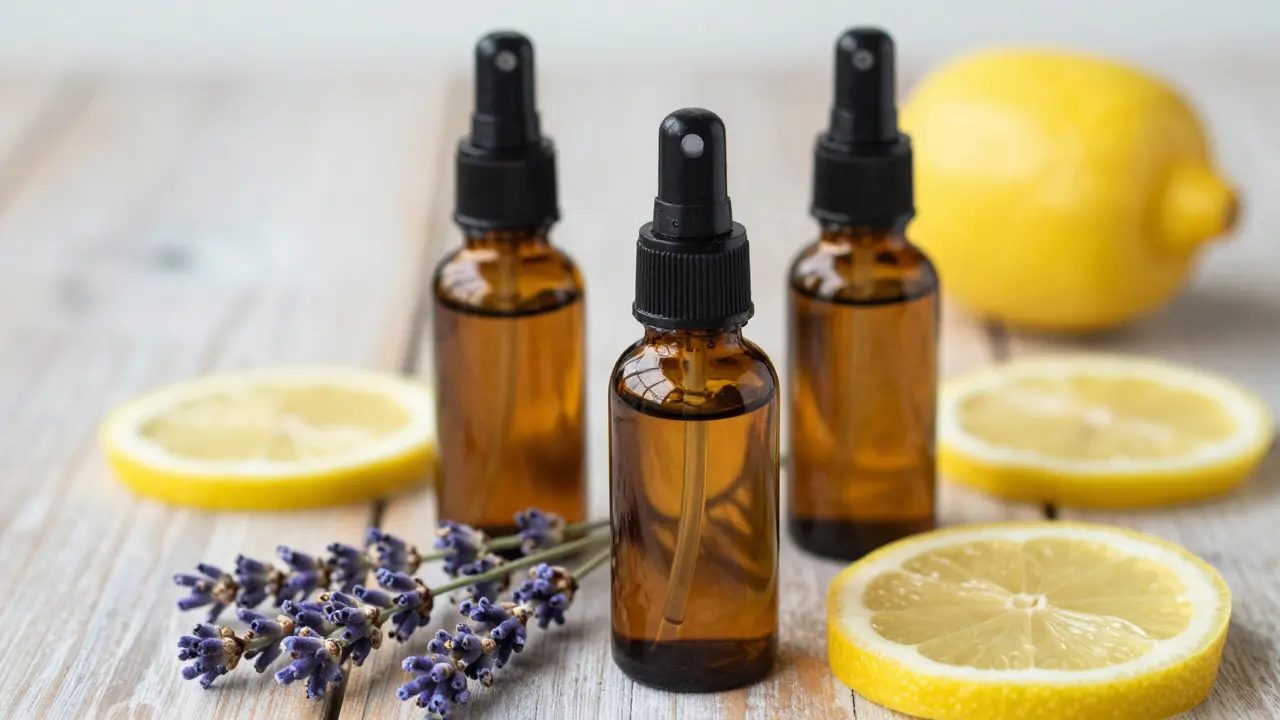
For the delivery methods, keep it simple. You will need small glass spray bottles (amber or cobalt blue glass protects the oils from light degradation), some cotton balls, and perhaps a few wooden clothespins. If you want to invest in one gadget, a basic ultrasonic diffuser is worth it, but it is by no means mandatory.
Recipe 1: The Instant Room Spray
This is the easiest way to refresh a room instantly. Commercial air fresheners often contain volatile organic compounds (VOCs) that can actually worsen indoor air quality. This DIY alternative cleans the air while scenting it.
The Ratio:** Start with a 1:1 ratio of water to vodka or witch hazel. Alcohol or witch hazel acts as a dispersant, helping the oil mix with the water since oil and water naturally repel each other. Without it, your spray bottle will clog, and the scent won’t distribute evenly.
- Fill a 4-ounce spray bottle halfway with distilled water.
- Add enough vodka or witch hazel to fill the remaining half.
- Add 10-15 drops of your chosen essential oil. For a "clean home" scent, try 8 drops of lemon and 7 drops of lavender.
- Cap the bottle and shake vigorously before every use.
Use this on linens, curtains, or simply mist the air. It works wonders after cooking fish or baking bread when you want to reset the kitchen odor.
Recipe 2: Passive Diffusion with Cotton Balls
Sometimes you want a subtle background scent, not a blast of aroma. This method uses passive diffusion, where the scent releases slowly as the oil evaporates. It’s perfect for drawers, closets, or the center console of your car.
Take a plain cotton ball and place 3-5 drops of essential oil onto it. Do not soak it; just enough to scent it. Place the cotton ball in a hidden spot. For example, put a lavender-scented ball in your sock drawer to keep things smelling fresh and help you relax before bed. Put a peppermint-scented ball near your computer desk to maintain alertness. Replace the cotton ball every two weeks or when the scent fades.
Recipe 3: Simmer Pot for Cozy Atmospheres
If you love the smell of a bakery or a spice market, a simmer pot is your best friend. This ancient technique involves heating water with natural aromatics on the stove. It adds humidity to dry winter air and fills the house with a warm, inviting scent.
Fill a small saucepan with water and bring it to a gentle simmer. Add your ingredients. Here are three classic combinations:
- Citrus Zest: Peel from two oranges, one cinnamon stick, and five cloves.
- Herbal Freshness: A handful of fresh rosemary sprigs and slices of lemon.
- Spiced Apple: Chunks of apple, a star anise pod, and a dash of nutmeg.
Let it simmer on low heat for up to an hour. Check the water level frequently; if it boils away, add more hot water. Never leave the stove unattended. This method is particularly effective in Perth’s drier months when the air conditioning runs constantly.
Safety First: Handling Essential Oils Responsibly
While these oils come from nature, "natural" does not automatically mean "safe." Essential oils are highly concentrated chemical compounds. A single drop of lemon oil contains the essence of dozens of lemons. Respect their potency.
Dilution is key.** Never apply undiluted essential oils directly to your skin. Always dilute them in a carrier oil if you are making body products. For general room spraying, the ratios mentioned above are safe, but avoid spraying directly onto pets or babies.
Pet Safety.** This is crucial. Cats and dogs metabolize chemicals differently than humans. Tea tree oil, pennyroyal, and eucalyptus can be toxic to cats if ingested or absorbed through their paws. If you have pets, research specific oils before using them in enclosed spaces. When in doubt, ensure good ventilation and allow your pets to leave the room if they seem distressed.
Photosensitivity.** Citrus oils like bergamot, lemon, and lime can cause severe skin burns if exposed to sunlight shortly after application. If you use these oils in lotions or creams, do so only at night. For room sprays, this is less of a concern unless you spray directly on skin.
Troubleshooting Common Issues
The scent is too strong.** Essential oils are potent. If a room feels overwhelming, open a window immediately. Reduce the number of drops in your next batch. Remember, you should barely notice the scent; it should be a background note, not a foreground shout.
The spray bottle is clogged.** This happens when oil separates and blocks the nozzle. Shake the bottle harder before use. Consider adding a bit more alcohol to your recipe to improve dispersion. Clean the nozzle with warm soapy water if it gets stuck.
The oil smells rancid.** Essential oils oxidize over time, especially citrus oils. If your lemon oil smells sharp, chemical, or unpleasant, toss it. Store all oils in cool, dark places. Heat and light are the enemies of shelf life. Most citrus oils last 6-12 months, while woody oils like cedarwood can last several years.
Can I mix any essential oils together?
Technically, yes, but not all combinations smell good or work well therapeutically. Citrus oils blend well with floral scents like lavender or geranium. Woody oils like cedarwood pair nicely with earthy scents like vetiver or patchouli. Avoid mixing strong, clashing scents like heavy spices with delicate florals unless you are experienced. Start with simple two-oil blends before experimenting with complex recipes.
How long do DIY room sprays last?
Because they contain water, DIY room sprays have a shorter shelf life than pure oils. Use them within 1-2 weeks. If you see cloudiness or mold, discard the mixture immediately. To extend the life, store the bottle in the refrigerator, though this may slightly alter the scent profile due to cold temperatures.
Is it safe to use essential oils around children?
Yes, with caution. Children have sensitive respiratory systems. Use lower concentrations (fewer drops) and ensure the room is well-ventilated. Avoid oils known to be irritating or toxic to young children, such as eucalyptus and peppermint, for kids under six. Always keep bottles out of reach to prevent accidental ingestion, which can be dangerous.
Do I need a diffuser for aromatherapy?
No. While diffusers are convenient for continuous scent distribution, they are not necessary. Passive methods like cotton balls, linen sprays, and simmer pots are effective and often cheaper. Ultrasonic diffusers add humidity to the air, which is a bonus in dry climates, but the therapeutic benefits come from the inhalation of the aromatic molecules, regardless of the delivery method.
Why does my essential oil stain my wood furniture?
Citrus oils, in particular, can strip the finish off wood surfaces due to their solvent properties. Never pour essential oils directly onto wood. Always dilute them in water or oil first, and test a small, inconspicuous area before widespread use. If you spill pure oil on wood, wipe it up immediately with a damp cloth.