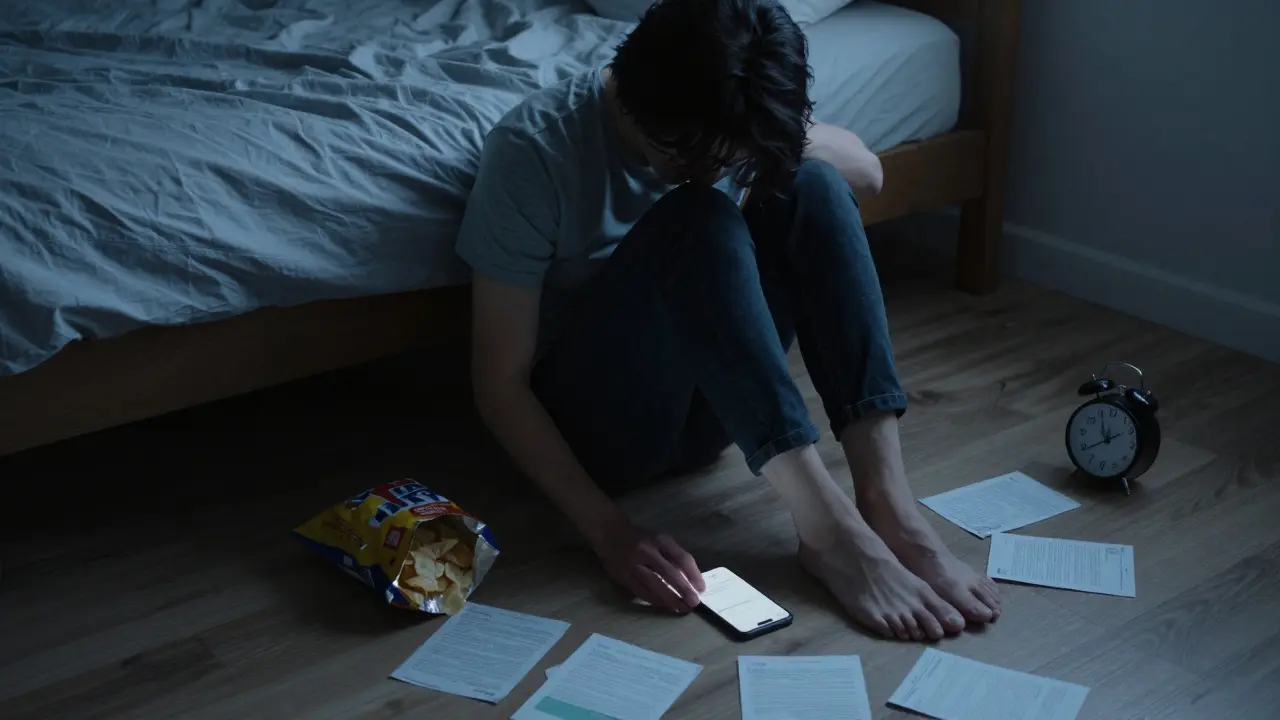
Ignoring your mental health is like ignoring a car’s check engine light-eventually, something breaks down for good. Mental health isn’t just about feeling sad or anxious. It’s about how you think, feel, and show up in your life every day. The problem? Many signs are quiet, sneaky, and easy to brush off as stress, laziness, or just being "in a rut." But if you’re noticing these 10 patterns in yourself, it’s not just a bad week. It’s a signal.
You’ve stopped enjoying things you used to love
Remember when you used to love hiking, painting, or cooking? Now, even the thought of it feels like a chore. That’s not just being busy. That’s anhedonia-a core symptom of depression. It doesn’t mean you’re lazy. It means your brain isn’t releasing the same dopamine hits it used to. You’re not broken. Your nervous system is signaling that something’s off.
You’re constantly exhausted, even after sleeping
Five hours of sleep? You’re wiped. Eight hours? Still wiped. And it’s not because your mattress is bad or your coffee’s weak. Chronic fatigue tied to mental health isn’t physical. It’s emotional burnout. Your brain is working overtime to manage stress, worry, or unresolved trauma. The body doesn’t know the difference between a work deadline and a broken heart. It just shuts down.
Small things trigger big reactions
A text left unanswered. A traffic jam. A misplaced coffee cup. These used to roll off your back. Now, they set you off. You snap at your partner. You cry over nothing. This isn’t "being emotional." It’s your nervous system on high alert. When your brain is flooded with cortisol, your threshold for frustration drops. You’re not overreacting-you’re reacting to a system that’s been under siege.
You’re avoiding people, even the ones who care
You used to text friends every day. Now, you delete messages before replying. You cancel plans last minute. You say you’re "just tired." But deep down, you’re scared. Scared you’ll say the wrong thing. Scared they’ll notice you’re not okay. Social withdrawal isn’t about being introverted. It’s a survival tactic. Your mind is trying to protect you from judgment, pity, or the effort of pretending.

You’re stuck in negative thought loops
"I’m a failure." "Everyone hates me." "I’ll never get better." These thoughts aren’t just passing ideas. They’re mental ruts you keep walking. Your brain repeats them like a broken record because it thinks they’re true. This isn’t pessimism. It’s cognitive distortion. When you live in this loop, you stop seeing evidence that contradicts it. You forget the times you succeeded. You ignore the people who love you. Your mind is lying to you-and you’re starting to believe it.
Your sleep is all over the place
You can’t fall asleep. You wake up at 3 a.m. and can’t go back. Or you sleep 12 hours and still feel drained. Sleep isn’t just rest. It’s emotional processing. When your mental health is off, your sleep gets messy. Insomnia? That’s anxiety. Oversleeping? That’s depression. Either way, your body is trying to heal, but it’s stuck in a loop.
You’re using food, alcohol, or screens to numb out
You eat the whole bag of chips. You scroll for hours. You have one glass of wine… then another… then another. These aren’t habits. They’re coping mechanisms. You’re not weak for doing this. You’re trying to quiet the noise inside your head. But these behaviors don’t fix the root issue. They just delay it-and often make it worse.
You’ve lost interest in your own life
You don’t care about your job, your goals, your future. You feel like you’re just going through the motions. That’s not motivation. That’s detachment. When your mental health dips, you stop seeing a point. Why save money? Why plan ahead? Why try? It’s not laziness. It’s a loss of hope. And hope is the foundation of recovery.
You’re physically unwell for no reason
Headaches. Stomach pain. Muscle tension. Constant colds. Your doctor says you’re fine. But you’re not. Mental health and physical health are wired together. Chronic stress raises inflammation. It weakens your immune system. It tightens your muscles. It disrupts your digestion. Your body is screaming. You’re just not listening.
You talk about yourself in the past tense
"I used to be funny." "I used to be confident." "I used to care." This one’s subtle, but dangerous. When you describe yourself in the past, you’re not just reminiscing. You’re grieving a version of yourself that feels gone. That’s not nostalgia. That’s identity erosion. It’s a sign you’ve disconnected from who you are-and you’re starting to forget how to come back.
None of these signs mean you’re broken. They mean you’re human. And humans need help sometimes. The sooner you notice these signs, the sooner you can start healing. You don’t need to have a crisis to deserve support. You don’t need a diagnosis to matter. You just need to pay attention.
Start small. Talk to someone. Write down how you’ve been feeling. Schedule a check-in with a therapist-even if it’s just one session. You don’t have to fix everything today. You just have to stop ignoring the signals.
Are these signs the same for everyone?
No. Mental health looks different in every person. Some people cry constantly. Others become angry or numb. Some sleep too much. Others can’t sleep at all. There’s no checklist that fits everyone. What matters is noticing a change from your normal. If you’re not acting like yourself anymore, that’s the red flag.
Can these signs go away on their own?
Sometimes, yes-especially if they’re tied to a temporary stressor like a job loss or breakup. But if they last more than two weeks, or if they’re getting worse, they won’t just vanish. Mental health doesn’t heal by ignoring it. It heals with support, structure, and time. Waiting for it to fix itself often makes it harder to recover later.
I’m not depressed, but I feel off. Should I still do something?
Absolutely. You don’t need to be clinically depressed to benefit from support. Many people feel this way during burnout, grief, or major life transitions. Feeling "off" is your body’s way of saying you need care. Ignoring it can lead to deeper issues. Talking to a counselor-even briefly-can give you tools to feel like yourself again.
What’s the first step I should take?
Start by writing down how you’ve been feeling over the last week. Be specific: "I cried twice this week," or "I skipped three meals." Then, reach out to one person you trust-even if it’s just to say, "I’m not okay." You don’t have to explain everything. Just say you need help. That’s enough.
Is therapy the only option?
No. Therapy is one powerful tool, but not the only one. Others include support groups, regular exercise, better sleep habits, journaling, mindfulness practices, or even talking to a trusted friend weekly. The goal isn’t to find the "best" solution-it’s to find something that helps you feel less alone. Start with what feels doable.